Context Situated in a drought-prone region with unreliable electricity, the school struggled with frequent power cuts that disrupted students’ ability to study, access digital learning tools, and maintain basic comforts such as lighting and warm water. Many of the students come from families of daily wage labourers; the school’s mission has been to provide quality education despite significant resource constraints. Mucho del alumnado procede de familias de trabajadores jornaleros; la misión de la escuela ha sido proporcionar una educación de calidad a pesar de las importantes limitaciones de recursos.
Activities The project centred on installing 28 solar panels to ensure a 24-hour electricity supply, fundamentally transforming the learning environment. Beyond the infrastructure upgrade, the initiative included a series of awareness-raising activities designed to promote energy conservation and the adoption of renewable energy; students participated in essay writing, rangoli design, and slogan competitions about sustainability. Teachers conducted research on the benefits of solar energy, sharing their findings with parents and the broader community. Field visits to solar-powered farms provided practical insights, while parent workshops educated families about government subsidies available for solar adoption.
Results With uninterrupted electricity, academic performance has improved, digital learning has become seamless, and basic necessities such as warm water are now consistently available. The kitchen garden, powered by solar irrigation, won a second prize from the Education Department, supplying fresh produce for students and fostering a deeper connection to environmental stewardship. The project has also created a ripple effect in the community, with parents exploring solar solutions for their homes and students becoming ambassadors for sustainability, sharing their knowledge with families and neighbours. A key aspect of the project’s success was its collaboration with the Maharashtra State Electricity Board (MSEB), which not only facilitated the approval process but also allowed excess solar energy generated by the school to be redirected to the local grid to benefit the broader community. . The project stands as a testament to the transformative power of sustainable solutions in creating equitable, life-giving opportunities for education and community development.
People being served
People being served : Children and Young People
Age group : [display_acf_checkbox field="age_group"]
Number of participants : None
Schedule
Project status : Completed
The environmental awareness initiative involving solar panels took place between 2024 and 2025; the school continues to run its usual activities.
Collaborations
Images

Sudying at dark time

Essay competition on solar energy

Installation of solar panels on the school rook
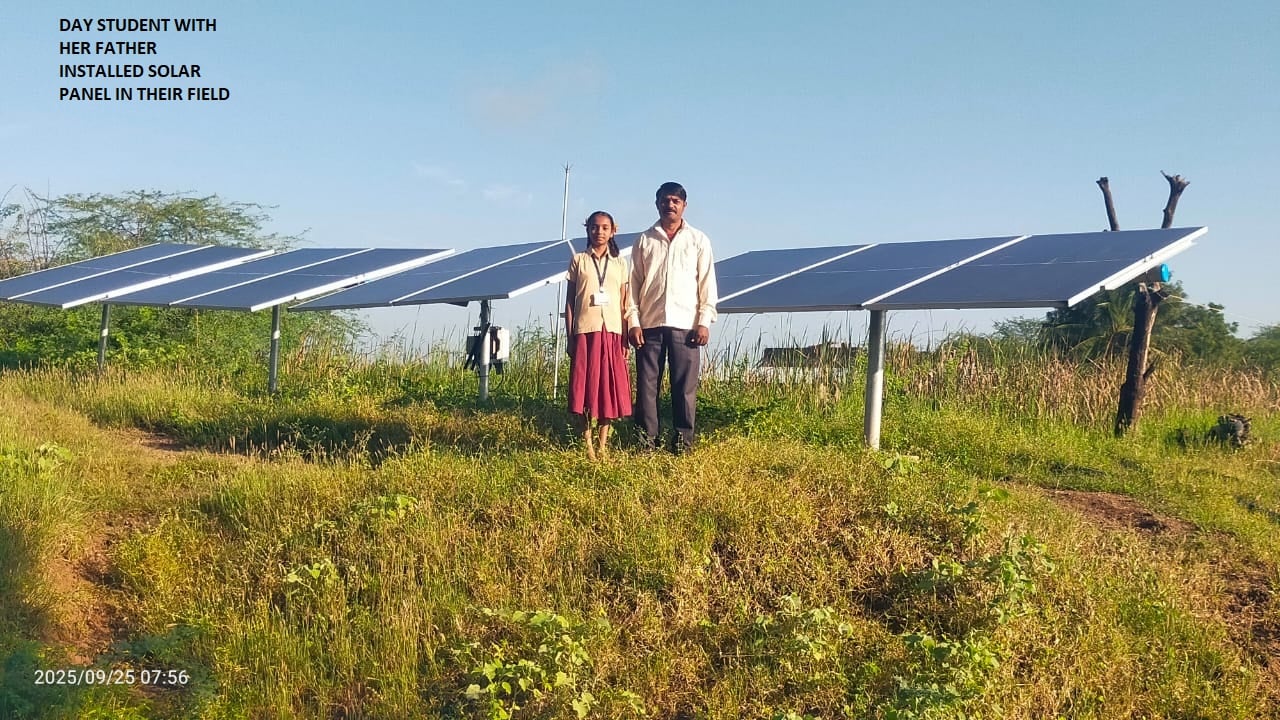
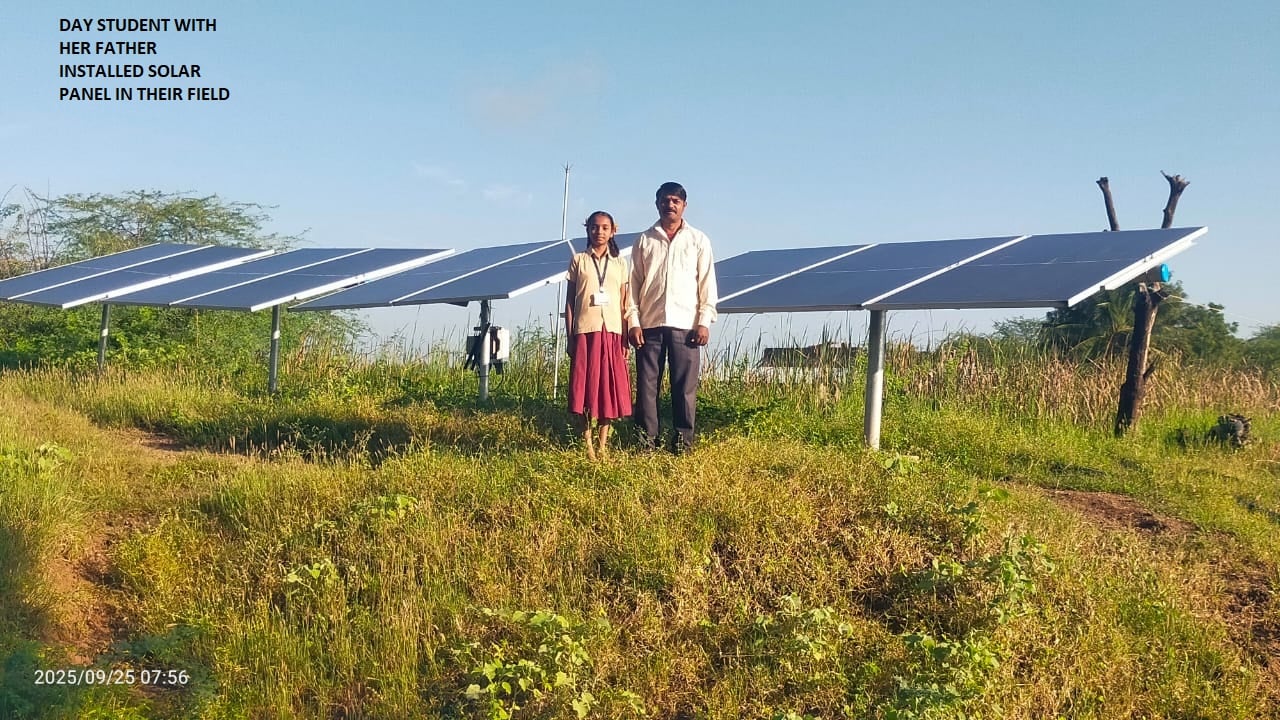
School family installing solar panels in their field
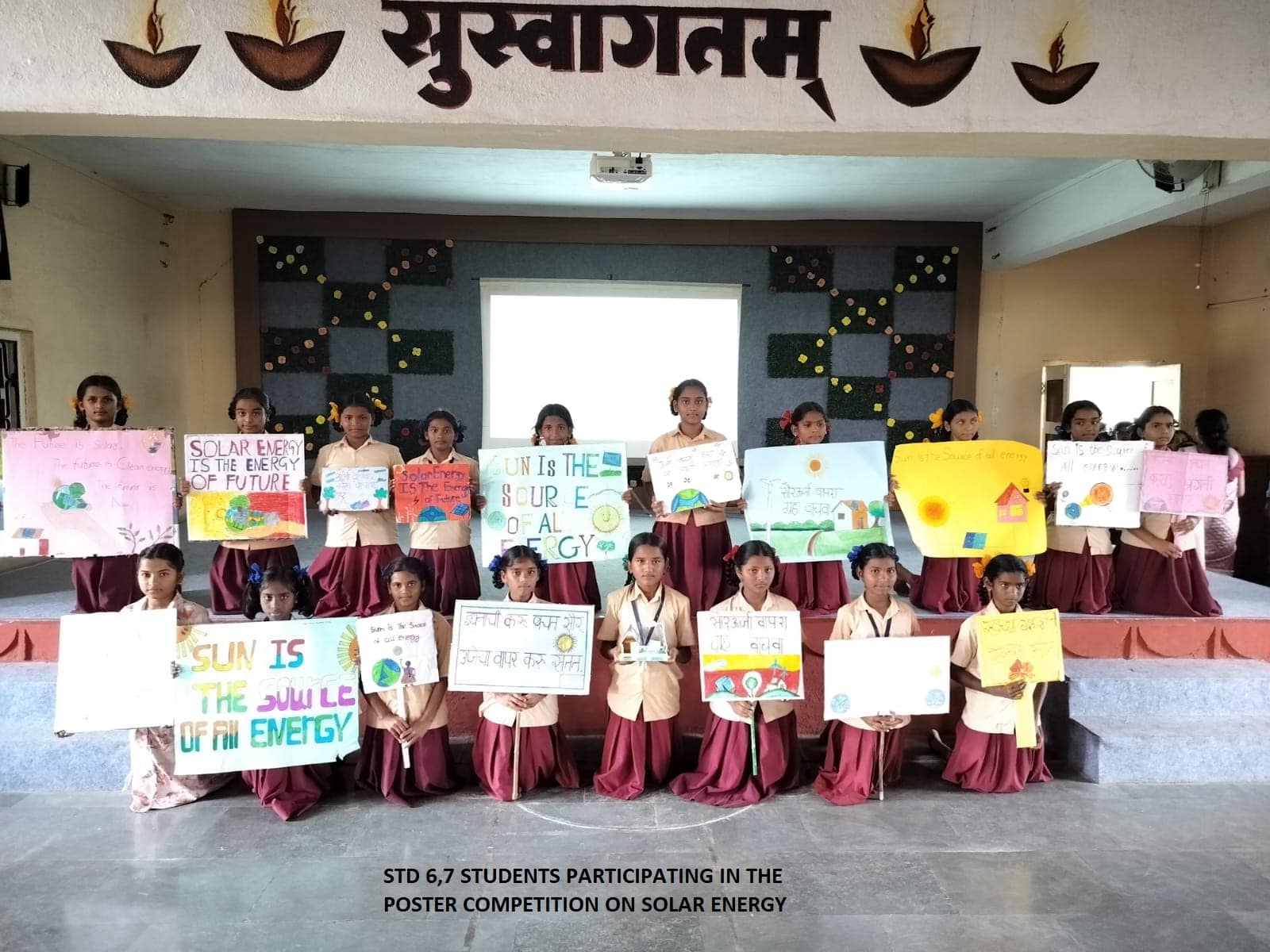
Students participating in teh poster competition on solar energy
Overview
Society presence : India
Focus of the project : Planet
JPIC Imperative : Care for Our Common Home
UN Sustainable Development Goals :