Background
In 2019, eight years after the Fukushima No.1 nuclear power plant explosion, the two towns, Okuma and Futaba, where the disaster occurred, are still No Return zones. Both sides of Route 6 along these areas are barricaded and only cars are allowed to go through.
The residents who used to live there now live in evacuation places, and are settled in with their new jobs, new schools and universities, and new environments. Some Joban trains that run through these areas are recovered and have started functioning, but still there are some parts not connected.
Many of the damaged farmlands are now covered with solar panels. In the areas 20km away from the nuclear power plant place, some farmers have started working on rice paddies in 2017.
Objectif
Support to the victims of the nuclear catastrophe
Activities
Handcrafts
-
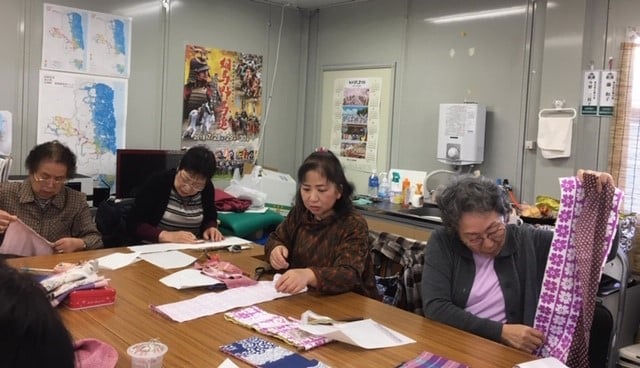
There were many temporary houses outside 30km of the Nuclear Power Plant, but many of them are now taken down. People who used to live there for 5-6 years now live in the restoration houses or their own newly built houses. There are still people who do not have any places to move into. One group whom we used to visit regularly are the victims of the Tsunami. They lost everything. Their houses were all swept away, and some of them have lost their loved ones. We used to do some handwork together in their meeting room. When their temporary houses were taken down they did not have any place to get together. They now come to our Caritas Minamisoma everyday and continue making small things, needlework.
-
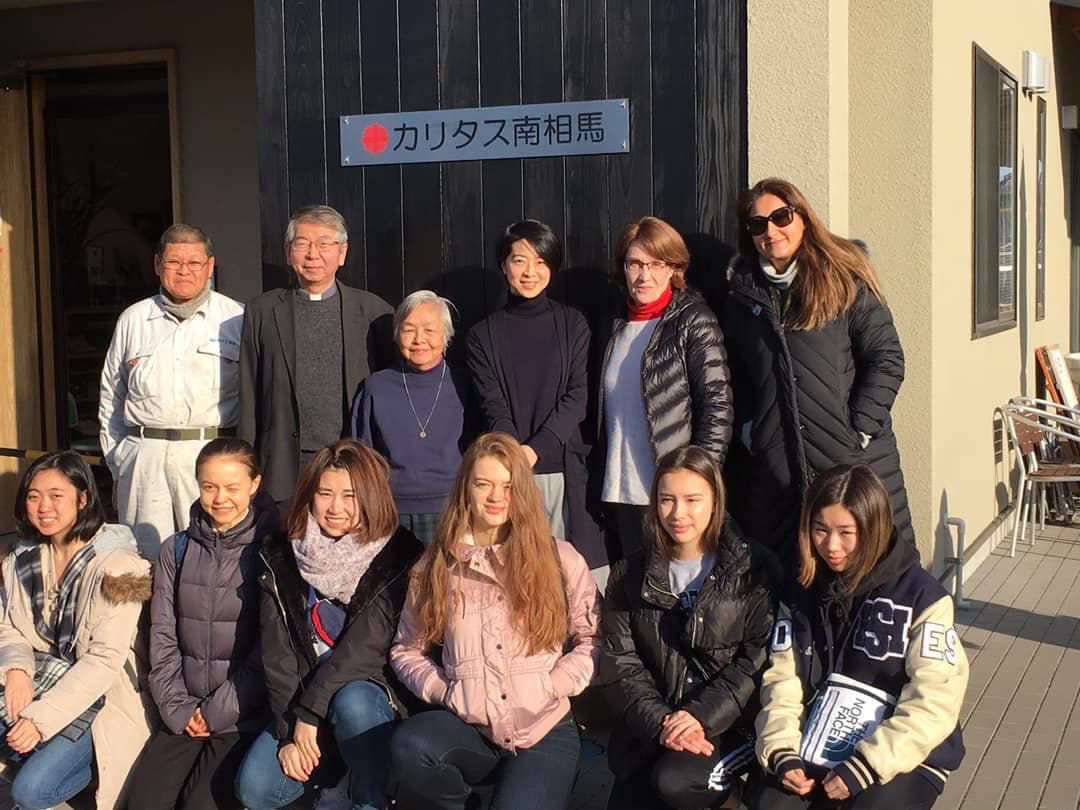
Haramachi Catholic Church, which is on the same premises of the Caritas Minamisoma, has a needlework group and we visit a couple of other gathering places of the victims and enjoy working together.
Children
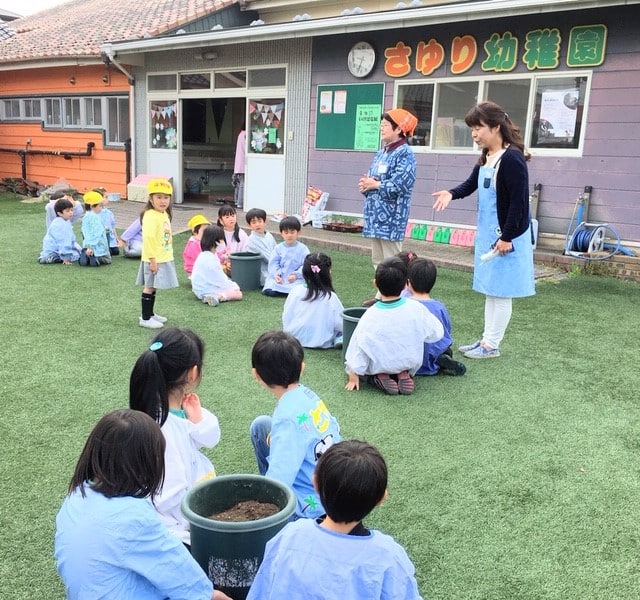
- Children's support: Sayuri Catholic Kindergarten is also on the same premises. Currently there are about 100 children ages 3-5. Many parents are working, and after regular classes, volunteers from Caritas Minamisoma look after their children. Usually we look after about 20 children.
Basic needs
- Accommodation and meals served at the Caritas Minamisoma
National awareness campaigns
- Awareness raising campaigns on the current situation and to keep in mind the importance of ecological issues. Some of the staff members go out to many places and share their experiences and the actual situation of the disaster areas. Fukushima News is mainly for the RSCJ in the Japan Province. Facebook and Fukushima Mission blog on the homepage of Japan Province are other ways to share what we do.
Extra comments :
Volunteers come from all over Japan, many through Catholic churches/schools/universities, but not necessarily Christians.
People being served
People being served : People who are marginalised
Age group : Adults 26-60, Children 0-17, Seniors 61-99, Young people 18-25
Number of participants : 251-500
Schedule
Project status : Ongoing
Collaborations
Images
Overview
Society presence : Japan
Focus of the project : People
JPIC Imperative : Transforming and Being Transformed
UN Sustainable Development Goals :