
Background
It all started in 1996, when the province decided to adpat its premises to respond to the needs to welcome and train migrants that were arriving in the suburbs of Madrid.
The approach of the centre is based on education, promotion of persons in helping them to improve their working skills, to obtain papers and rights, to integrate in a new culture, to resolve problems, and to acquire conscience of their dignity.
Objective
To foster social integration in marginalised groups of Madrid suburban areas, in particular for migrants and unemployed people.
Activities
A centre for integration and training for migrants, and following the 2008 global crisis, Spanish unemployed users are also being included in its activities.
The centres offers two macro services:
- Welcoming, Listening, Accompaniment, Basic needs:
- One-to-one Sharing
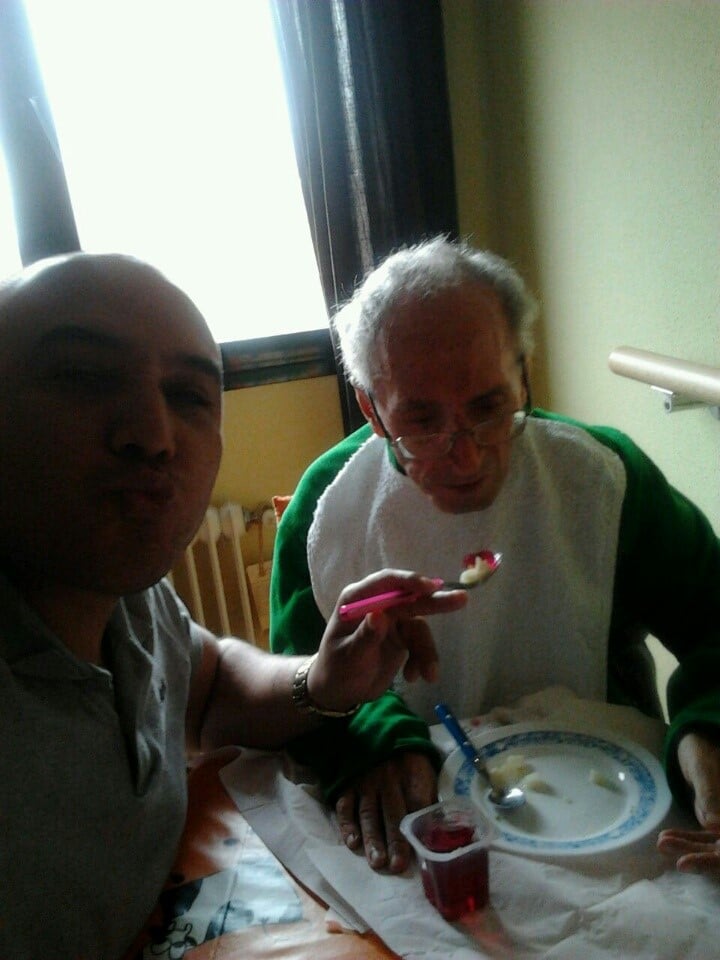
- To try and find resources and means to dignify the lives of the users, such as: food, job search, application forms for financial aid, pensions, subsidies, search for decent accommodation and housing, training, medical accompaniment, support in therapeutic drug addiction treatment. Throughout this intervention process, it is taken into account that many people are chronically homeless, and that the main intervention of the team is only to ensure that they have basic hygiene and a balanced diet. (An average of 30 to 35 people a day)
- Group Sharing
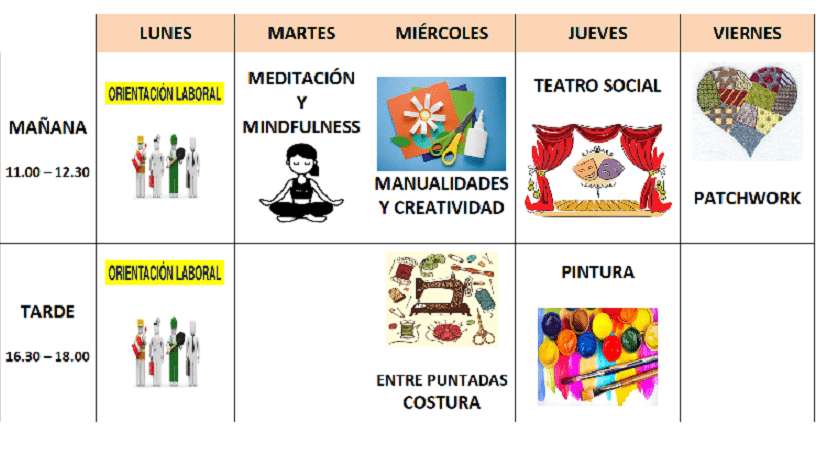
- Sharing happens in therapeutic and occupational workshops where, with different techniques, mainly manual and creative, to try to generate encounter spaces, where to share with other people, where to listen to others, to find oneself, to establish safe spaces that give us the opportunity to generate small support networks among all of us. An average of 30 people participate in the different activities (meditation, social theatre, patchwork).
- Solidarity canteen for homeless people (Monday-Friday): breakfast; soup kitchen; food parcels
- One-to-one Sharing
- Formation
- Legal advice
- Literacy course
- Spanish courses
- Spanish cooking and bakery courses
- Sewing and handcraft course
- Computer training
- Electricity
- Smart phone skills
- English
- Graphic design
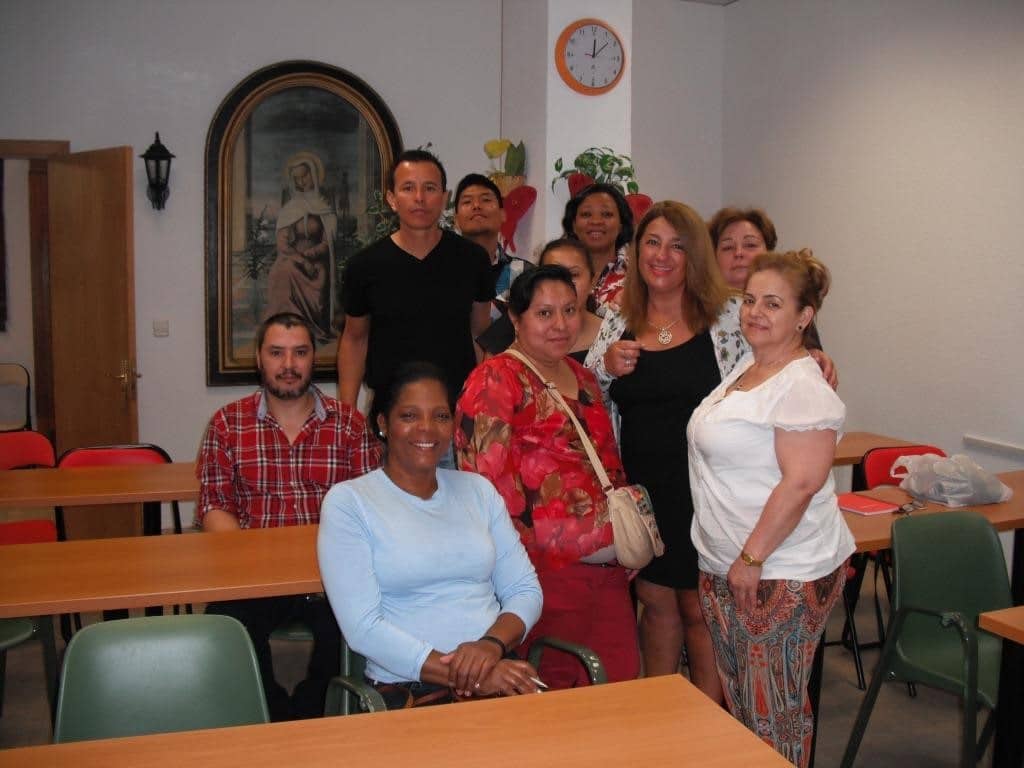
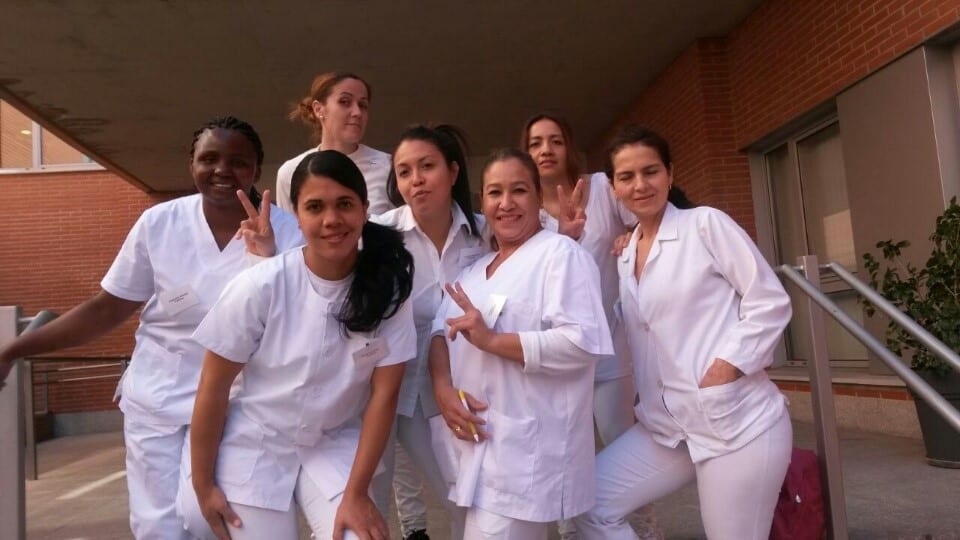
The central activity of the centre is the elderly care training course, since employment opportunities in the sector are high. The centre has been organising elderly care courses since 2008, around four courses a year. Courses are set as follows:
-
100-hours course of which 20 hours are theory and 80 hours training. It is a two-week theory and a four-week training in elderly care residences. Around 30 students enroll per course.
Outcomes
-
Around 120-150 students attending the elderly care course per year (divided into 4 courses), around 75% of fully complete the course (theory and stage) and receive a participation-course certificate. The certificate has no official value (the official certificate is for a 500-hour course)
-
About 50% of the elderly care students find employment
-
Assistance to immigrants affected by economic crisis, unemployment etc
-
Homeless people receiving daily food
People being served
People being served : People who are marginalised
Age group : [display_acf_checkbox field="age_group"]
Number of participants : >500
Schedule
Project status : Ongoing
Images
Overview
Society presence : Spain
Focus of the project : People
JPIC Imperative : Welcoming People on the Move
UN Sustainable Development Goals :