Background
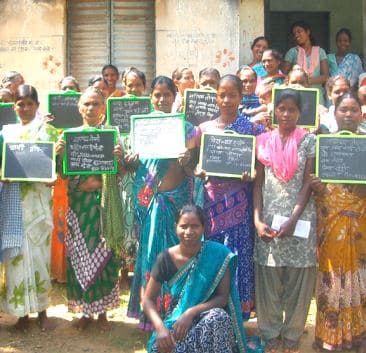
The Torpa Rural Development Society for Women is situated in the Khunti District of Jharkhand. It aims at empowering the tribal community, in particular the Munda tribe. Unlike the other two tribes in the area, the Oraon and Khadia, who are more spread out and a little more exposed to other cultures, the Mundas tend to be very reticent, non-verbal, non- expressive, even facially. As a result of centuries experience of exploitation and oppression by outsiders, all tribes, but particularly the Mundas, traditionally look on outsiders with suspicion. Today the Torpa Rural Development Society for Women has its intervention in 72 villages of the Torpa, Rania Murrhu and Arkie Blocks
The area is plagued by Maoists. There are 3 different groups who are fighting among themselves and innocent people are often victimised. This turf war between the three rival groups does affect our work. Overnight strikes are announced and then we just have to cancel our trainings etc. Sometimes for a week or so our staff is not able to enter the villages for supervision purposes because there are warnings from the villages of danger.
By nature the people here are satisfied with what they have. This make them less ambitious. So motivating people for any new or innovative ventures take a long time. The tribal people are very communitarian minded, therefore engaging the entire village community is essential.
The area is still not connected with roads and electricity. This make any technical development and marketing of local resources difficult The villages are divided into small hamlets. Lack of infrastructure like roads, transportation and wild elephants causes constrains in mobility and for children to go to school/ colleges. To go to neighbouring villages or to the doctors/hospitals for medicines is very difficult.
Human trafficking has been another big challenge due to isolated interior villages, the lonely roads and the culture of silence.
Objective
To empower tribal community, in particular the Munda tribe
Activities
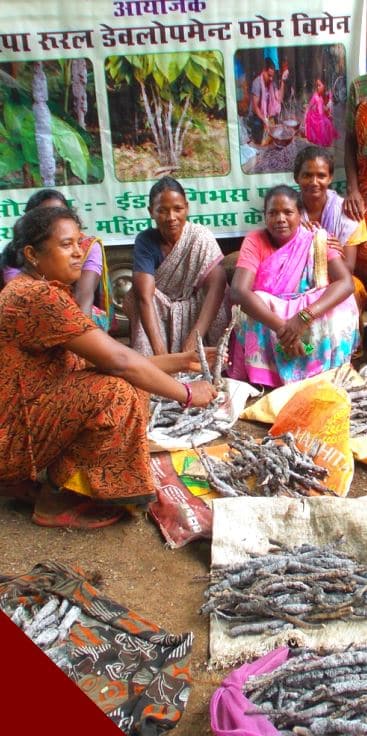
- Self-Help Group (SHG): Torpa Rural Development Society for women(TRDSW) is one of the pioneers in the promotion of Self-Help Groups (SHG) in India, having formed its first SHG in Khunti, Torpa. A Self-Help Group is an informal association of 10 to 20 poor women belonging to the same village and sharing a common socio-economic background. The group enables its members to gain their identity as individuals, while realising and utilising the immense power of mutual aid. Nurturing Self-Help Groups of rural poor women is TRDSWs key tool in fulfilling its mission and goals. This Self-Help Groups work for the women in a number of ways: provide guidance; give support and assistance to women; identify and promote home-based enterprises among its members. These home-based enterprises, called honeybee activities, involve a myriad of ventures. The SHG members take loans from the SHGs and set out to begin an enterprise of their own.
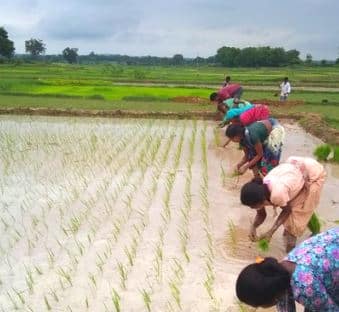
- Sustainable livelihood activities (farmers' club): The focus of the livelihood programme has been the promotion of and giving commercial value to the local resources like forest products, lac, bamboo handicrafts, agriculture, trading in dry fish, ladies garments, weekly restaurants, running PDS (Public Distribution System) shops etc. Livelihood programs are strengthened through a three tier approach 1) Capacity building through training exposures, demonstrations etc. 2) connecting to resources like Government schemes, banks 3) exploration and tie up with marketing avenues. Actions to it include: kitchen gardens, and village committee meetings (gram sabha).
- Climate smart agriculture practices,
- Creating livelihood adaptations against drought (resilience)
- Value addition
- Advocacy to influence decisions within political, economic, and social institutions as to ensure that those who are most vulnerable in society, are able to have their voice heard on issues that are important to them; defend and safeguard their rights; and have their views and wishes genuinely considered when decisions are being made about their lives.
- Popular education in government schools for adults: among the actions are the introduction of a library room/corner in 40 centres
- Teaching pedagogy,
- Awareness raising. It happens at different levels:
- In agriculture: to enhance farmers to return to traditional methods of farming e.g. making organic manure, compost, use traditional seeds not hybrid seeds, etc. to look at crop patterns, to create alternatives, resilience.
- Human trafficking: awareness and connecting people with the (AHTU) anti human trafficking unit at the district & state level
- Capacity building of staff
Results
In the past 4 years 800 families were successfully connected with lac related livelihood and 1200 families were connected with agricultural activities. Besides that, around 300 women are successfully implementing their group or individual income generation activities like weekly market, restaurant, fisheries, garment shops etc. Around 1800 families have definitely raised their standard of living to the quality where they have enough to eat and we have seen that these families have sent their children to better schools for education. In the last election 42 women members stood for election for local posts. The SHG members supported them through-out the election process. From among these 42 women, 35 women won the election. One became the Jilha parishad President, one an up-pramukh, 3 Mukhias and the rest all are ward members. In last 2 years we were able to rescue 32 trafficking victims and we are in dialogue with different govt Departments for their rehabilitation.
As of March 2010, TRDSW has worked with some 200 SHGs across state of Karnataka, representing a total membership of 3000 rural poor women. These SHGs have mobilized a total savings of 70 lakh rupees and still counting.
Women's literacy is increasing in the area.
In 2018, the following activities were carried out: Education Exposure Trip - Jan 16 ITE Mela - Jan 29 Women Empowerment - Feb 7 Women's Day - Mar 13 Sustainable Livelihood - Mar 15 Tribute to St. M. Sophie - May 25 Human Trafficking.
People being served
People being served : People who are marginalised
Age group : Adults 26-60, Seniors 61-99, Young people 18-25
Schedule
Project status : Ongoing
Images
Overview
Society presence : India
Focus of the project : People
JPIC Imperative : Transforming and Being Transformed
UN Sustainable Development Goals :