Background
The area in the southwest of the municipality of Zapopan, where one of the RSCJ community lives, is very close to the Bosque de la Primavera, one of the most important natural reserves in Jalisco, Mexico. This forest has been brutally deforested, as well as being a space for drug cultivation and excessive use of chemical fertilisers, so that the herbal plants are very likely to lack and to be polluted.
Direct objective
To favour the care of the environment by organically planting medicinal plants.
Indirect objective
Strengthen the family economy and community organisation.
Activities
Creation of a consortium of health promoters.
For the management of the organic land, the women beneficiaries, the health promoters (promotoras de salud), receive training in organic agriculture, drip irrigation, vermicomposting, composting and eco-techniques. In addition, for the popular training in medicinal plants, the promotoras de salud are herbalist teachers, each one has a group of women who want to learn to be a health promoter.
Preparation of an organic plot of land
Local authorities were approached with a request for free loan of land use in Colonia Miramar, southwest of the municipality of Zapopan, Jalisco, Mexico.
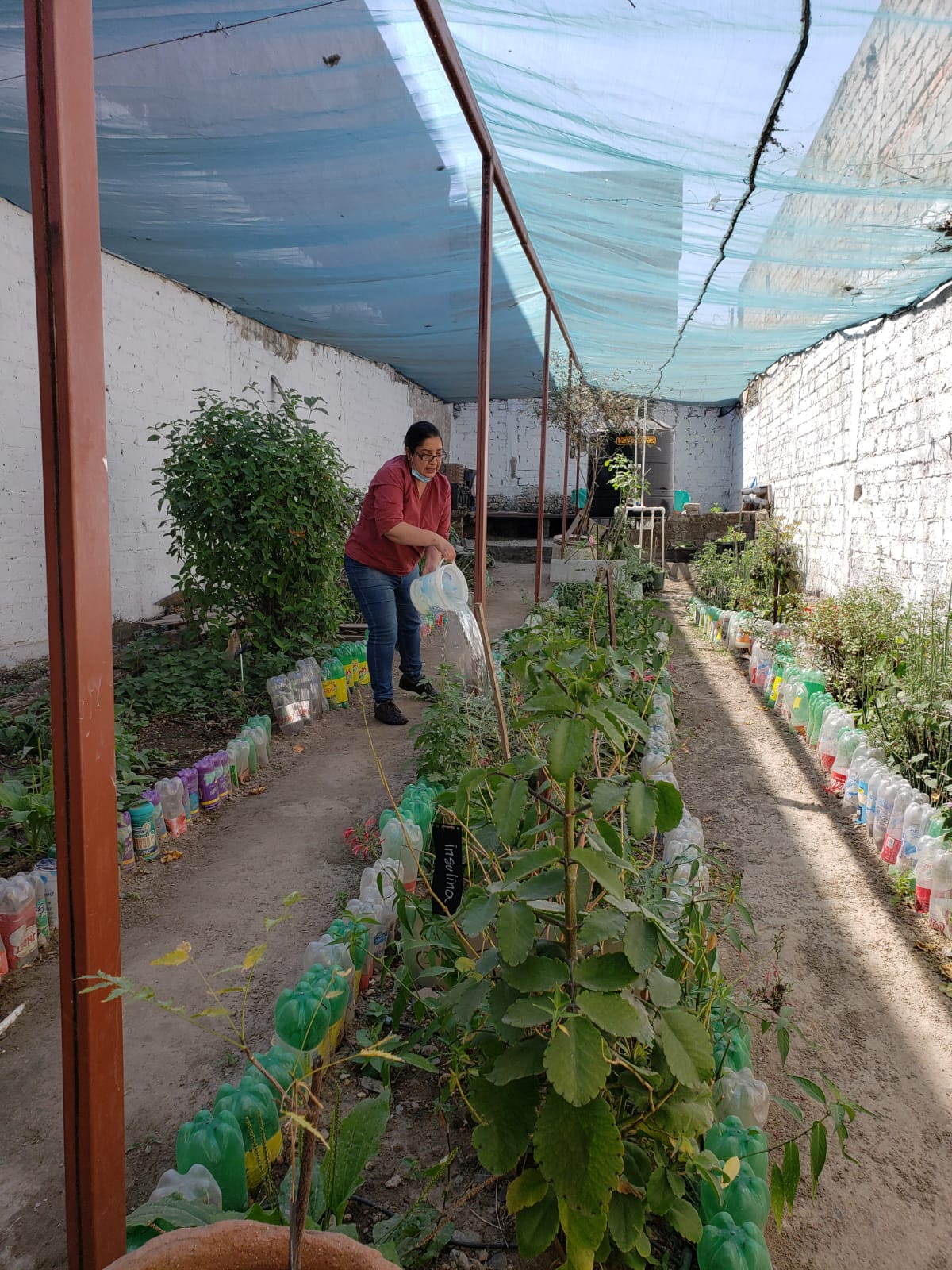
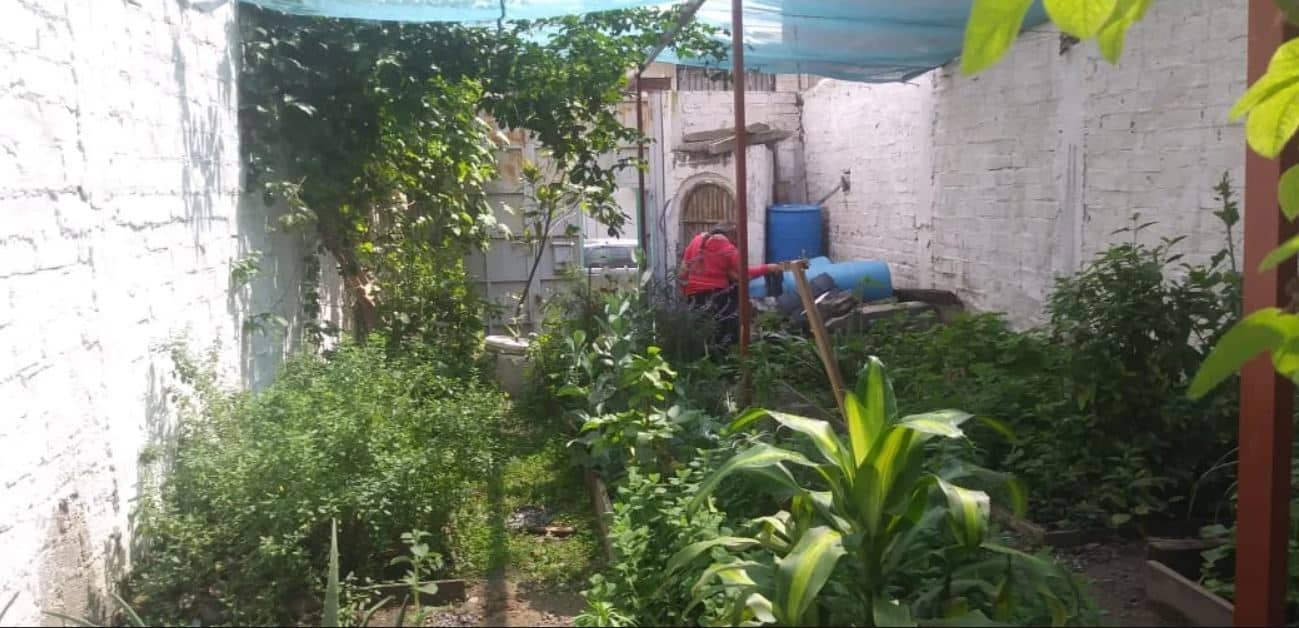
- The consortium of health promoters regenerated the plot with organic compost and eco-agricultural techniques.
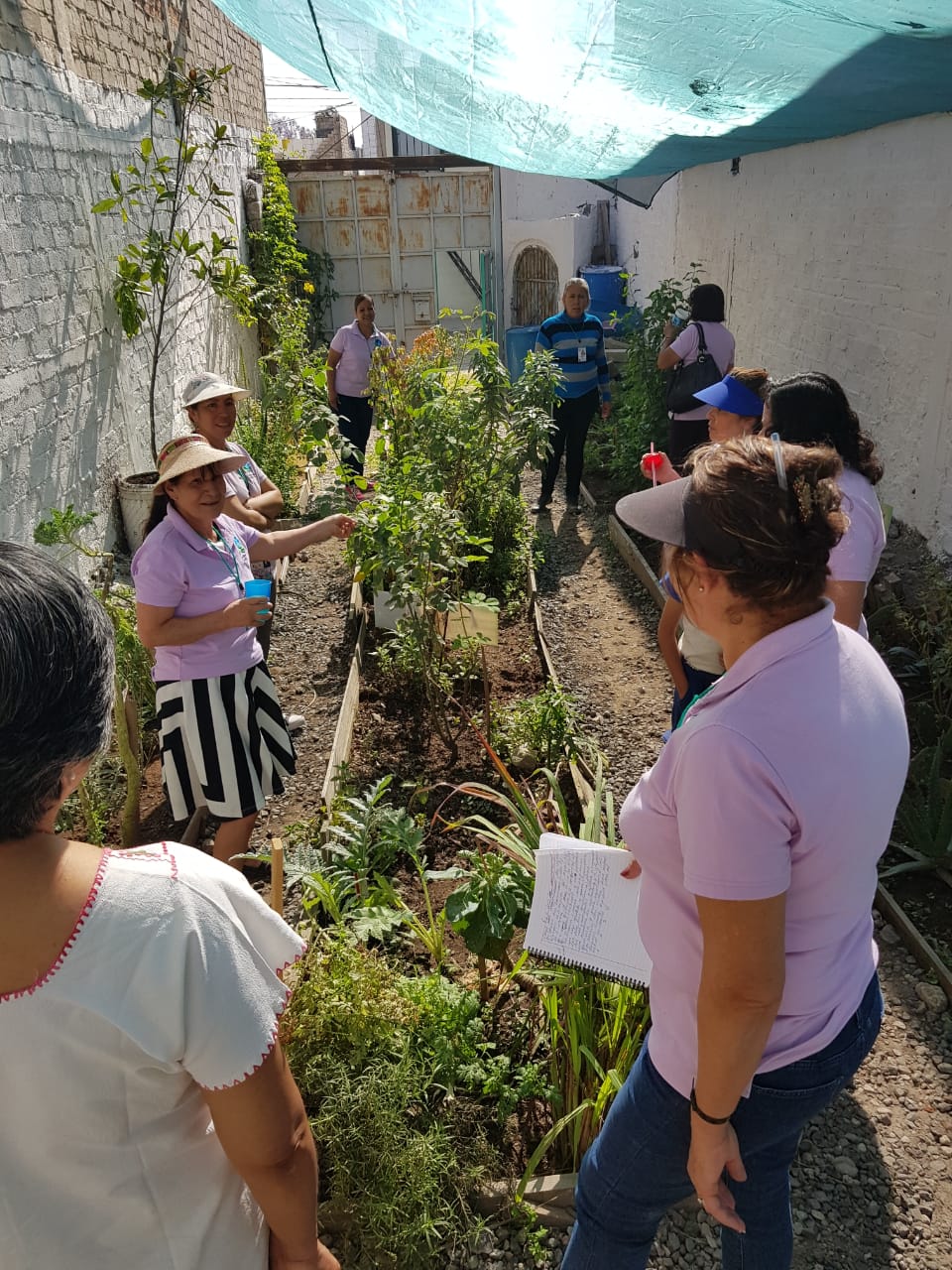
- Organic beds of medicinal plants were made, organised by systems and apparatus according to the human body.
- Medicinal plants were planted and cared for.
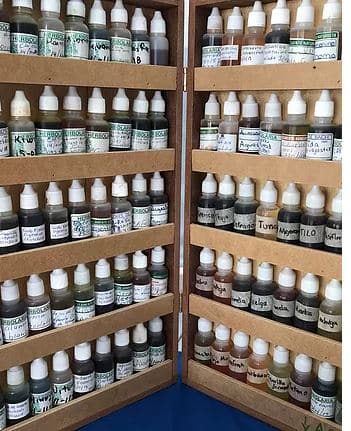
- Medicinal plants have been harvested and prepared for the production of medicinal products.
- Herbal products have been produced. Cultivated plants have been used for the production of tinctures, microdoses, cleaning and personal care products: shampoo, cream, repellent, ointments, syrups, etc. See catalogue at: www.comcrece.org
Management of the Living Pharmacy (Farmacia Viviente)
The consortium of health promoters is organised into 4 teams to attend the Farmacia Viviente - each team is made up of 4-5 women health promoters. Each team attends weekly the Farmacia Viviente to prune, weed, feed the earthworms, check the drip irrigation, maintain the compost, etc. Each team reports to the Living Pharmacy coordinator.
Each month, at their Consortium Assembly meeting, the Living Pharmacy coordinator (who is one of the promoters herself) reports on the progress, difficulties and pending issues in the Living Pharmacy, where they make agreements and implement them during the following month.
Popular training
- The health promoters have used the medicinal plant beds to teach popular herbalism classes.
Results
- Environmental impact has been achieved in the area, as the land is organically cultivated and cared for in a suburban area.
- The quality, production and health of the medicinal plants has been guaranteed.
- The quality of the medicinal products that have been produced has been enhanced.
- There has been an increase in the use of alternative medicine in the area.
- An improvement in the health and hygiene of the beneficiary community has been noticed.
- The community organisation and the economy of the families involved has been favoured.
- The sale of herbal products by the women involved in the Farmacia Viviente project has provided them with economic support and resources for their subsistence.
People being served
People being served : Women
Age group : [display_acf_checkbox field="age_group"]
Number of participants : 51-100
Schedule
Project status : Ongoing
Images
Overview
Society presence : Mexico
Focus of the project : Planet
JPIC Imperative : Care for Our Common Home
UN Sustainable Development Goals :